
Lac qui Parle Weekly Arrest Log
There is no official seven-day arrest blotter for Lac qui Parle County. No 72-hour list exists either. The county website links only to an In Custody List. That table shows current custody and nothing more. Once a person walks out of the jail, the county makes no promise. The row may not stay up. So the roster cannot rebuild a full week of admissions and releases.
A true weekly log would preserve events across a set period. No archive or date filter appears on the site. The official route is a date-bounded request to the Sheriff's Office. Give exact start and end dates. Say whether you want booking, admission, release, incident, or photograph data. Those are distinct records with different classifications.
Lac qui Parle County arrest log: The weekly arrest log lists people booked into the county jail. Each entry pairs a name with a booking date and charge. Court files hold the final word on every case.
Build a Lac qui Parle Blotter
No official online weekly blotter exists here. Build your Lac qui Parle date range from the agencies themselves rather than trusting any mirror site to be complete.
- Choose exact beginning and ending dates, including approximate times when a weekend or holiday crosses the boundary.
- Check the official current-custody table and save its generated timestamp. It may identify people still held, but not everyone booked during the range.
- Contact the Sheriff's Office at 320-598-3720 or submit a public-data request for booking and release records in the selected period.
- Ask separately for incident reports or booking photographs if needed. Access and withholding rules can differ.
- Search Minnesota Court Records Online for filed cases in Lac Qui Parle County. Do not expect every booking to produce a case.
- Use local news archives only for context, then verify names, dates, and outcomes with official sources.
Need just today? The Daily Arrest Report gives the current-custody workflow. A weekly search spreads wider and leans more on records the Sheriff retains.
Lac qui Parle Log Fields
There is no public weekly entry format here. Ask for fields that let each custody event stand on its own facts.
| Requested field | Why it matters |
|---|---|
| Name and agency identifier | Supports careful identity matching. |
| Booking number | Ties the request to a particular intake. |
| Admission and release time | Defines events within the chosen week and reveals short stays. |
| Arresting or lodging agency | Shows whether the Sheriff, Dawson-Boyd Police, or another agency supplied the event. |
| Charges at booking | Records charges or holds at intake, not final disposition. |
| Bail or bond status | Captures a status that may later change. |
| Release or transfer | Explains why a person is no longer on the current roster. |
| Photograph, if public | Must be requested as agency data; no image is guaranteed. |
The county Departments page points to the In Custody List as the web route. No separately labeled archive appears there.
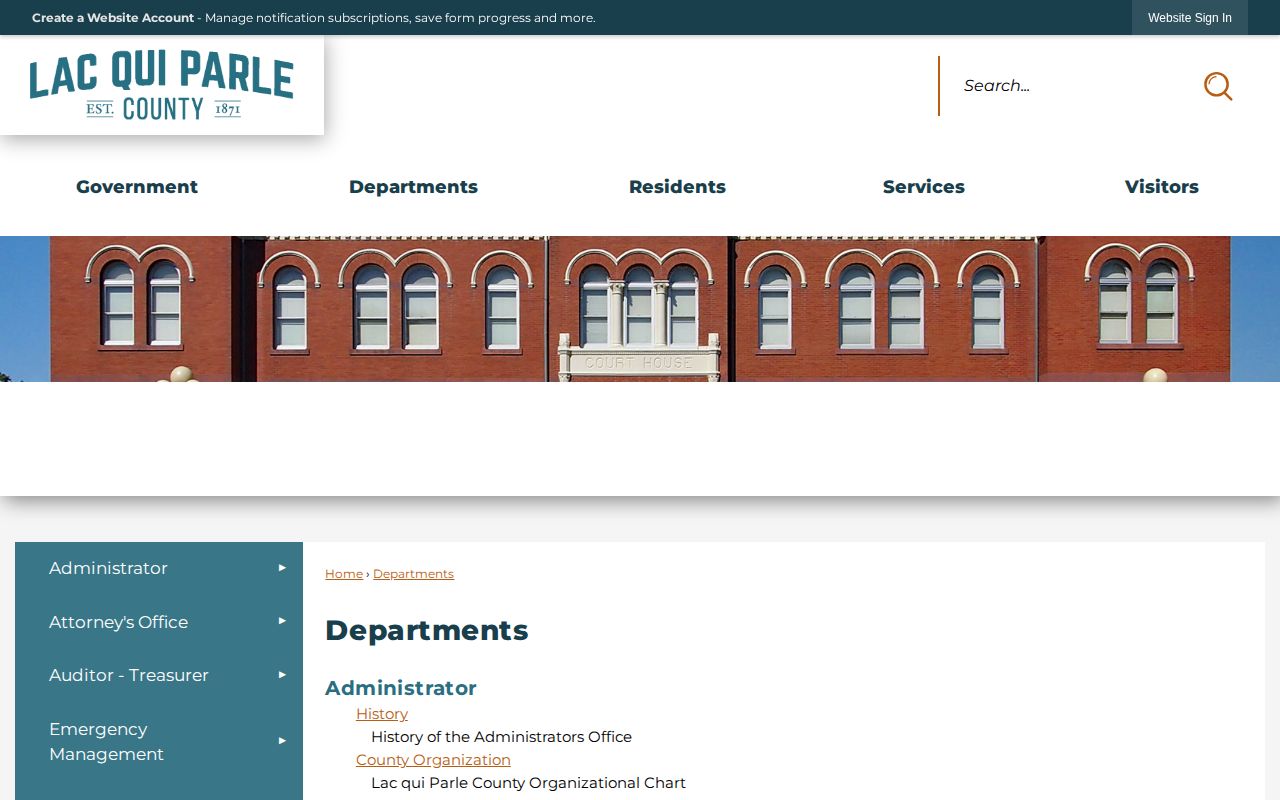
The capture points to current custody, not a weekly arrest-history tool.
Lac qui Parle Weekend Arrests
Weekend and holiday searches need firm boundaries. An arrest late Friday may not be entered until after midnight. A brief stay may end before anyone checks. Court filing runs on its own schedule too. None of this timing adds up to a complete online weekend list.
So request admission and release data for the whole interval, not just names showing Monday. Note the timezone and include both boundary dates. Sheriff dispatch runs around the clock, but that does not mean a multi-day log is posted continuously or that every detail comes by phone.
Weekend check: A Monday look at custody plus a court search can miss releases and unfiled bookings. A bounded Sheriff request fills the gap.
Lac qui Parle Arrest Archives
The county never says how long roster rows stay online. Released entries and booking photos may or may not sit in a public archive. A row that vanishes is not proof of deletion. Retention follows approved schedules and data classifications. A filed criminal case follows court access rules instead. For older material, ask the Sheriff whether the record is kept and in what form.
The Minnesota Historical Society maps out Sheriff and law-enforcement schedule categories. It points researchers to State Archives for current schedule help. That path covers retention, not a booking search. If access is denied, ask for the written explanation. Minnesota Statutes section 13.03 requires one tied to law. The State Archives government-records page lays out the county law-enforcement schedule context.
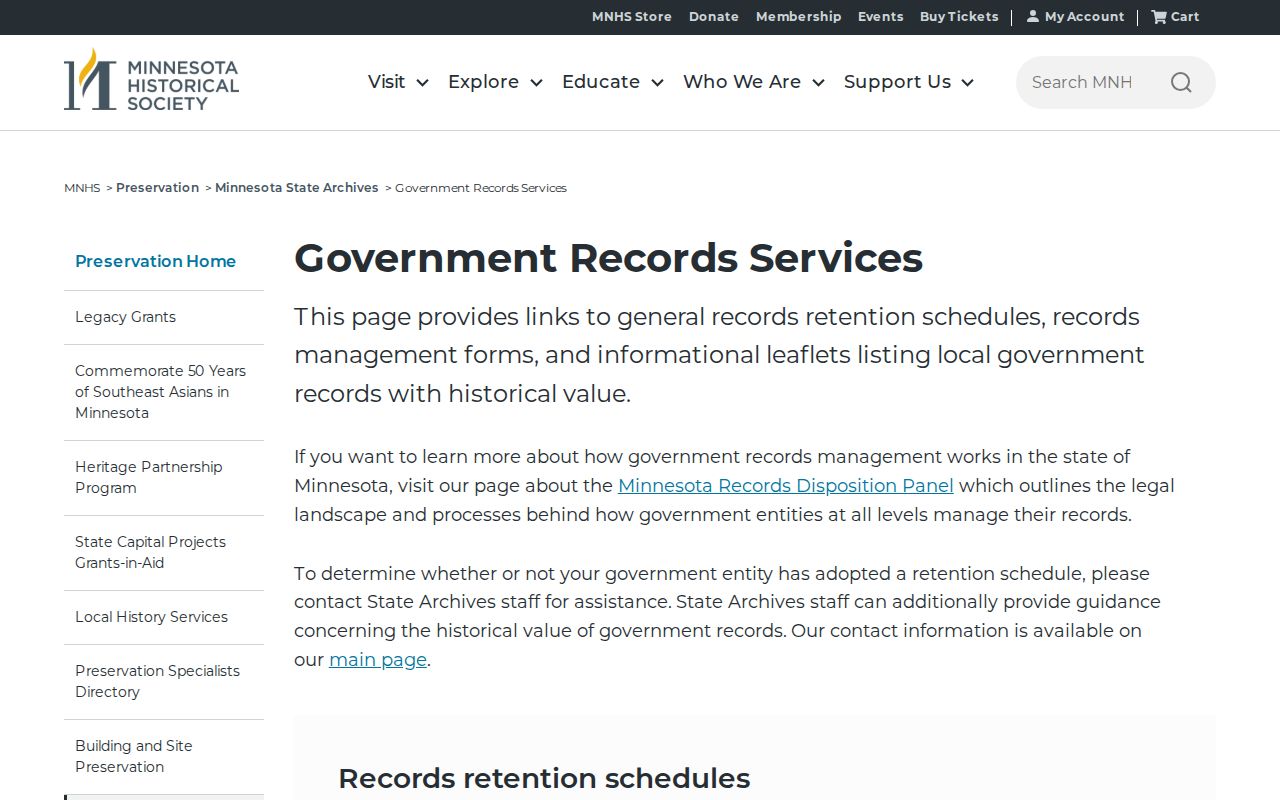
This resource helps locate retention authority when an older booking no longer appears online.
Lac qui Parle Booking History
Old jails rarely leave tidy digital files. Lac qui Parle County built its first jail back in 1891. A new jail project was finished in 1965. Then a 1983 review found the facility below standards. Part of the former residence became administrative space, and secure booking and visiting rooms were added. That history describes the building itself. It cannot promise that any old booking record still exists online.
Modern records split by purpose too. The current In Custody List is a live operational display. An admission or release record may stay with the Sheriff after its roster row disappears. Incident reports sit with the arresting agency. A filed case belongs to district court. Older records may sit under a retention schedule. So ask which office actually holds the record you want before assuming a blank search ends the trail.
The History page itself is not an arrest archive. It just frames a careful request. Give staff a date span, the record type, a known name or booking number, and your preferred electronic format. If nothing turns up, ask whether it was retained, transferred, restricted, or lawfully destroyed under an approved schedule.
Local Weekly Arrest Coverage
For Lac qui Parle County arrests, weekly newspapers fill the gaps that booking rosters leave open. The Western Guard website posts its weekly edition online. Its archive and eEdition reach older issues. A paper is not a booking roster, though. Coverage depends on what a reporter chases that week. The Dawson Sentinel brings its own long history of local publishing. The Minnesota Historical Society notes that post-1977 Sentinel issues generally live at the Gale Family Library. KLQP radio rounds out the mix. County-listed social channels sometimes carry public-safety notices too. Treat every story as a lead, cross-check dates and agencies against Sheriff records, and let the court file settle how a charge ended, since a story can stay online after custody or charges change.
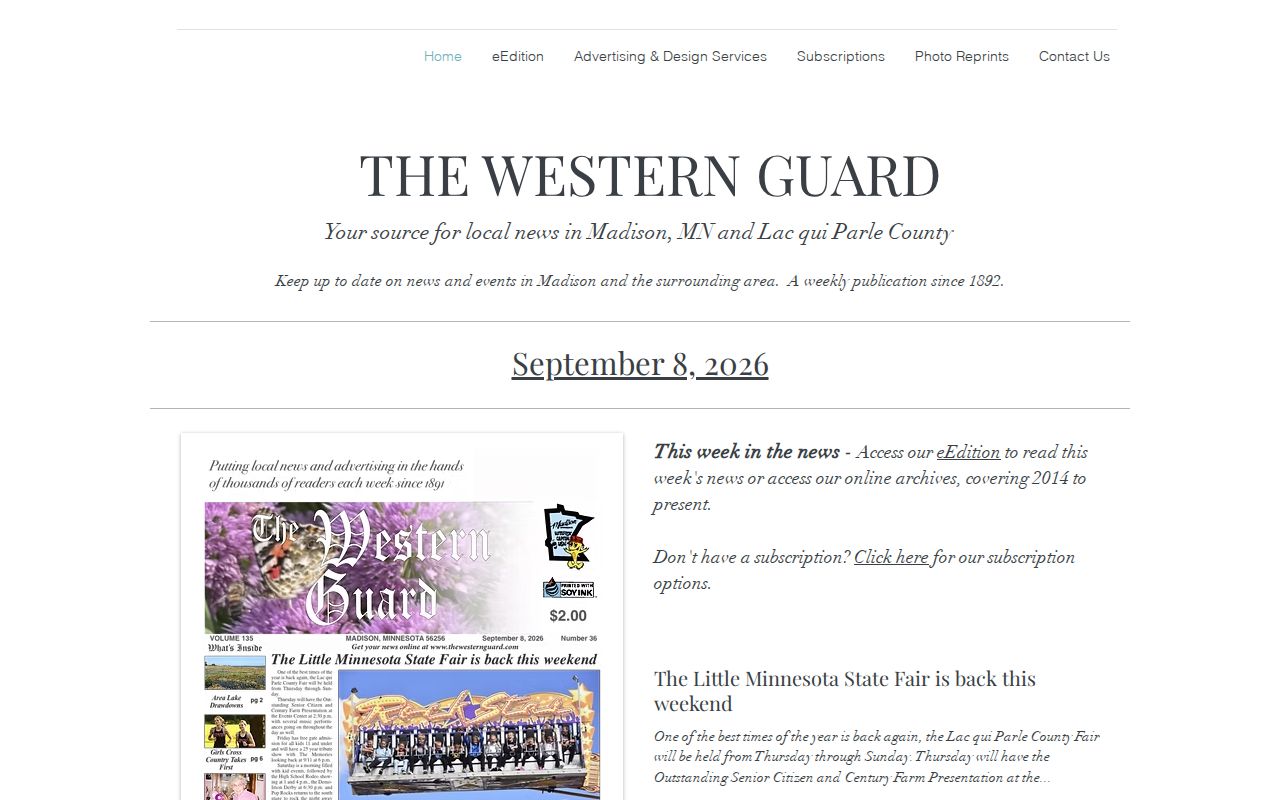
The archive offers reported context, but it is not a county-maintained arrest log.
Unofficial Lac qui Parle Arrest Logs
Unofficial arrest sites promise quick mugshots. RecentlyBooked hosts a Lac qui Parle page. Mugshots.com and Arrests.org cover Minnesota more broadly. None of them is a source of record. Aggregators scrape public material, mislabel counties, and keep entries online long after a release. Busted Newspaper loads an error page. Mugshots.zone redirects rather than serving a county archive. A dead page tells you nothing about whether an arrest happened. If an unofficial result conflicts with county data, save the URL and note the time. Then compare it against the Sheriff record before checking the court file. When official data is wrong, request a correction from the originating agency. Minnesota Statutes section 13.03 backs that request.
From Arrest Log to Disposition
A Lac qui Parle County arrest log only starts the story. The ending lives in court records. Search MCRO by person, case, citation, or filing detail. Select Lac Qui Parle County and run your search. Minnesota Court Records Online shows whether a public case was filed and what docket events followed. It skips some bookings. Its online display is not the official court record, so order the clerk's record when the exact outcome matters. The county-wide recent arrest and records guide maps the full booking-to-court path. Keep three dates apart. Booking date, filing date, and disposition answer different questions.
The District Court sits at 600 Sixth Street, Suite 11, Madison, reachable at 320-295-4000. Calendars are not arrest lists. Hearings move, and restricted proceedings stay off the public calendar. Geography matters for records requests: Madison contracts with the Sheriff, while Dawson-Boyd Police patrols Dawson and Boyd and the Sheriff runs county-jail custody. Bellingham publishes no separate police blotter. A weekly inquiry may need an incident report from the arresting agency plus admission and release data from the jail. The Minnesota BCA criminal-history search covers convictions, not weekly arrests, and the DOC locator only tracks people committed to state corrections. Federal BOP and ICE locators are separate systems. Match each search to its own custody stage and the gaps stop fooling you.
Public Record Search
Sponsored Results